
The Twin Capitals of the World
Three towns where twins seem everywhere. Igbo-Ora, Kodinhi and Cândido Godói all claim unusual numbers of twins. What is measured, what is local lore and what might explain it.

The entrance arch of Cândido Godói, the Land of Twins: Felipe P at Portuguese Wikipedia, CC BY-SA 3.0
Igbo-Ora, Nigeria
Igbo-Ora, a town in Oyo State in southwestern Nigeria, proudly calls itself the Twin Capital of the World, and a statue of a mother carrying her twins stands near one entrance to town. The claim rests on a real pattern. Yoruba communities in the region have the highest twinning rate measured anywhere, roughly 45 to 50 twin sets per 1,000 births, several times the rate in most of Europe.
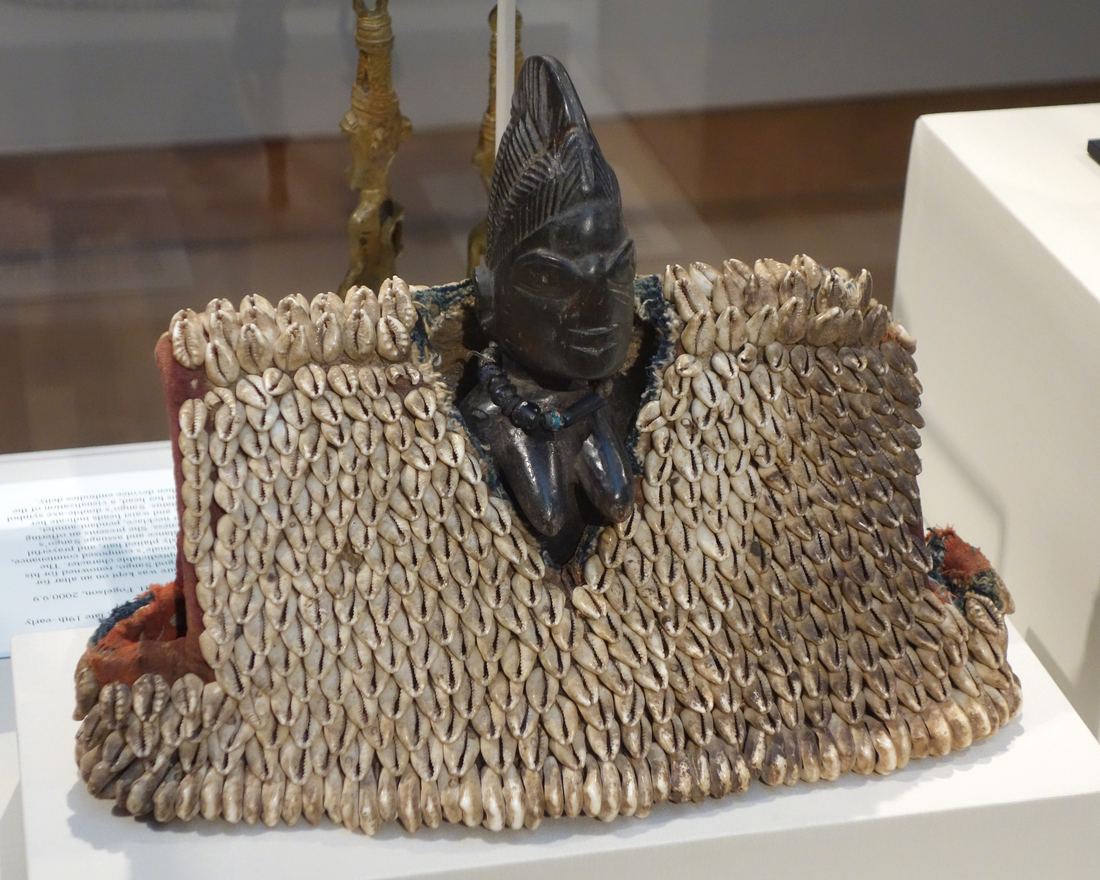
Locals often credit the food, especially yams. Researchers at the Lagos University Teaching Hospital suggested a natural compound in the peel of a widely eaten yam might encourage the release of extra eggs, but no direct link has been proven, and genetics may be the bigger factor. Twins hold a cherished place in Yoruba culture. The first born is called Taiwo and the second Kehinde, and by tradition Kehinde is seen as the elder, having sent Taiwo ahead to check that the world was ready. Families have long honored twins with small carved figures known as ere ibeji.
Kodinhi, India
Kodinhi is a village in Kerala's Malappuram district, mostly ringed by backwaters, that was home to around 2,000 families in 2008. Local surveys suggest it holds well over 400 pairs of twins, a striking number in a country with one of the lower twinning rates in the world. Residents say the oldest known pair was born in 1949.
Nobody has explained it. Some people point to the local water, but there is no firm evidence, and diets in Kodinhi are not known to differ much from the rest of Kerala. In 2008 about 30 twin pairs and their parents founded the Twins and Kins Association, reportedly the first such group in India, to speak up for the needs of families with multiples.
Cândido Godói, Brazil
In the far south of Brazil, near the Argentine border, the small municipality of Cândido Godói greets visitors with an arch that reads Terra dos Gêmeos, Land of Twins. The twins cluster in a rural settlement called Linha São Pedro, where about one birth in ten has been reported as twins, compared with 1.8 percent across the state of Rio Grande do Sul. Many families there descend from German immigrants, and twin births were noted from the early 1900s onward. Geneticists suspect a founder effect: a trait carried by a few early settlers can become common when a small community stays close-knit for generations.
Reading the numbers wisely
Twin-town figures usually come from local surveys and news reports rather than national birth registries, so treat precise counts as estimates. What is well established is that fraternal twinning, the kind that comes from two eggs, can run in families. That makes small, tight communities natural places for twins to pile up, whatever role food or water may also play.
- The entrance arch of Cândido Godói, the Land of Twins: Felipe P at Portuguese Wikipedia, CC BY-SA 3.0
- A Yoruba ere ibeji twin figure in a cowrie garment: Daderot, CC0
Text written by Actual Twin.
← Mirror-Image TwinsTwins Days Festival in Twinsburg, Ohio →




_with_Cowrie_Garment_(ewu_ileke),_Nigeria,_Yoruba_people,_20th_century,_wood,_glass_beads,_cowrie_shells,_plant_fiber,_leather_-_Chazen_Museum_of_Art_-_DSC01821.JPG)