Nature's Mimics
Lookalike animals and plants that fool the eye. Viceroy butterflies, hoverflies, bee orchids, leaf insects and the shape-shifting mimic octopus: how nature's lookalikes trick predators and pollinators.
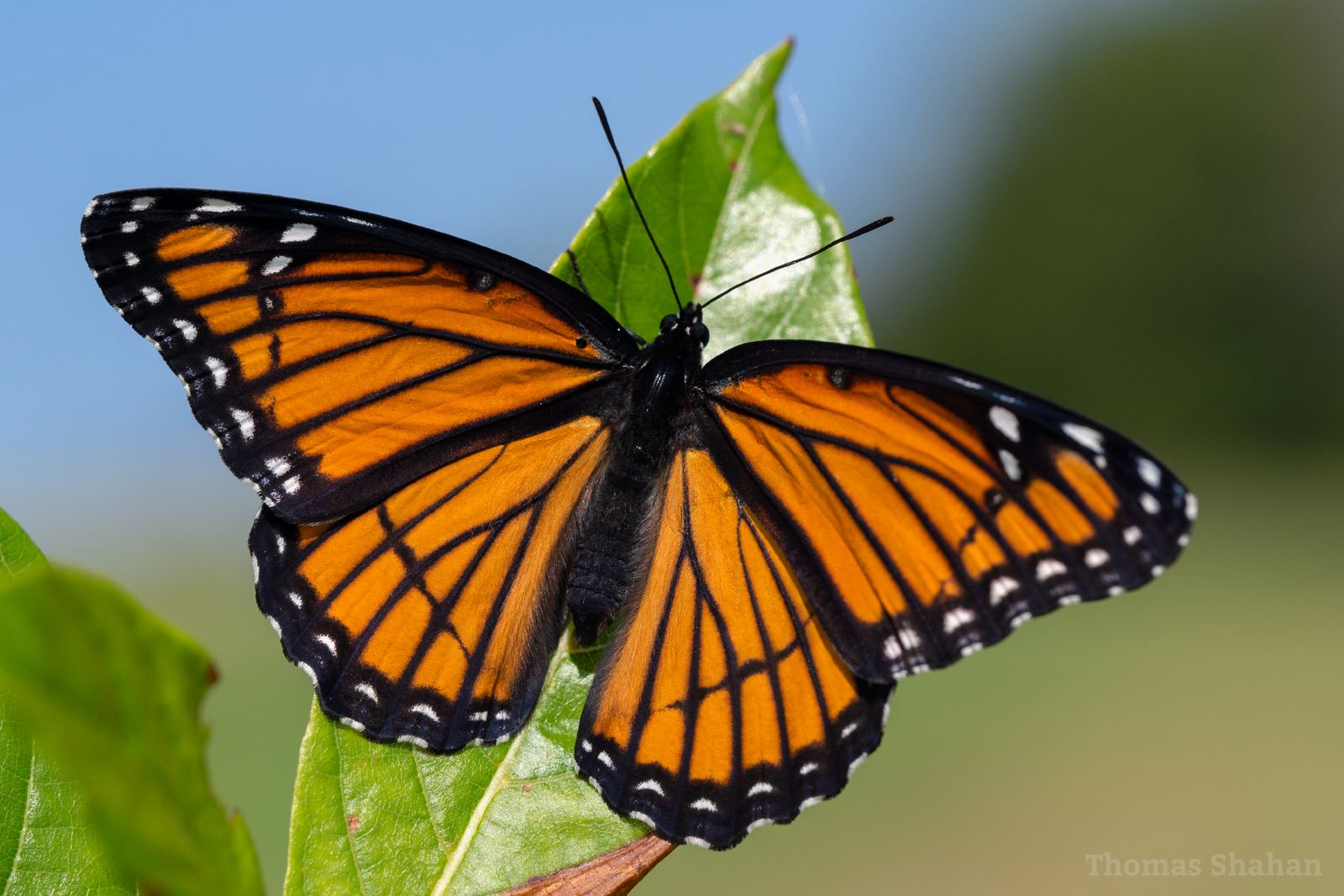
A viceroy butterfly, the monarch's lookalike: Thomas Shahan 3, CC BY 2.0
Two ways to borrow a warning
Bright stripes and bold colors often mean one thing in nature: do not eat me. Animals that sting or taste foul advertise it, and predators learn the lesson fast. Some species take advantage of that lesson by looking like someone else.
In Batesian mimicry, named after the English naturalist Henry Walter Bates, who studied butterflies in the Amazon rainforest, a harmless species copies the warning colors of a dangerous one. In Müllerian mimicry, proposed by the German-Brazilian naturalist Fritz Müller in 1878, two or more well-defended species come to share the same look, so a predator only needs one bad experience to avoid them all.
The viceroy surprise
The viceroy butterfly of North America is a near double of the monarch, orange with black veins and white-dotted edges. You can tell it apart by its smaller size and a black line that curves across its hindwings.
For a long time the viceroy was the textbook Batesian mimic, a tasty butterfly hiding behind the monarch's bad reputation. Then experiments showed that birds found viceroys just as unpleasant as monarchs. Today scientists see the pair as Müllerian mimics, two distasteful butterflies backing up the same warning. In the far south, viceroys even turn a darker mahogany shade that matches the local queen butterfly.
Flies in wasp costumes and flowers that look like bees
Hoverflies are a family of about 6,000 species, and many of them wear yellow and black stripes like wasps and bees. They cannot sting, yet birds and people often mistake them for something that can. The drone fly even looks like a honeybee.
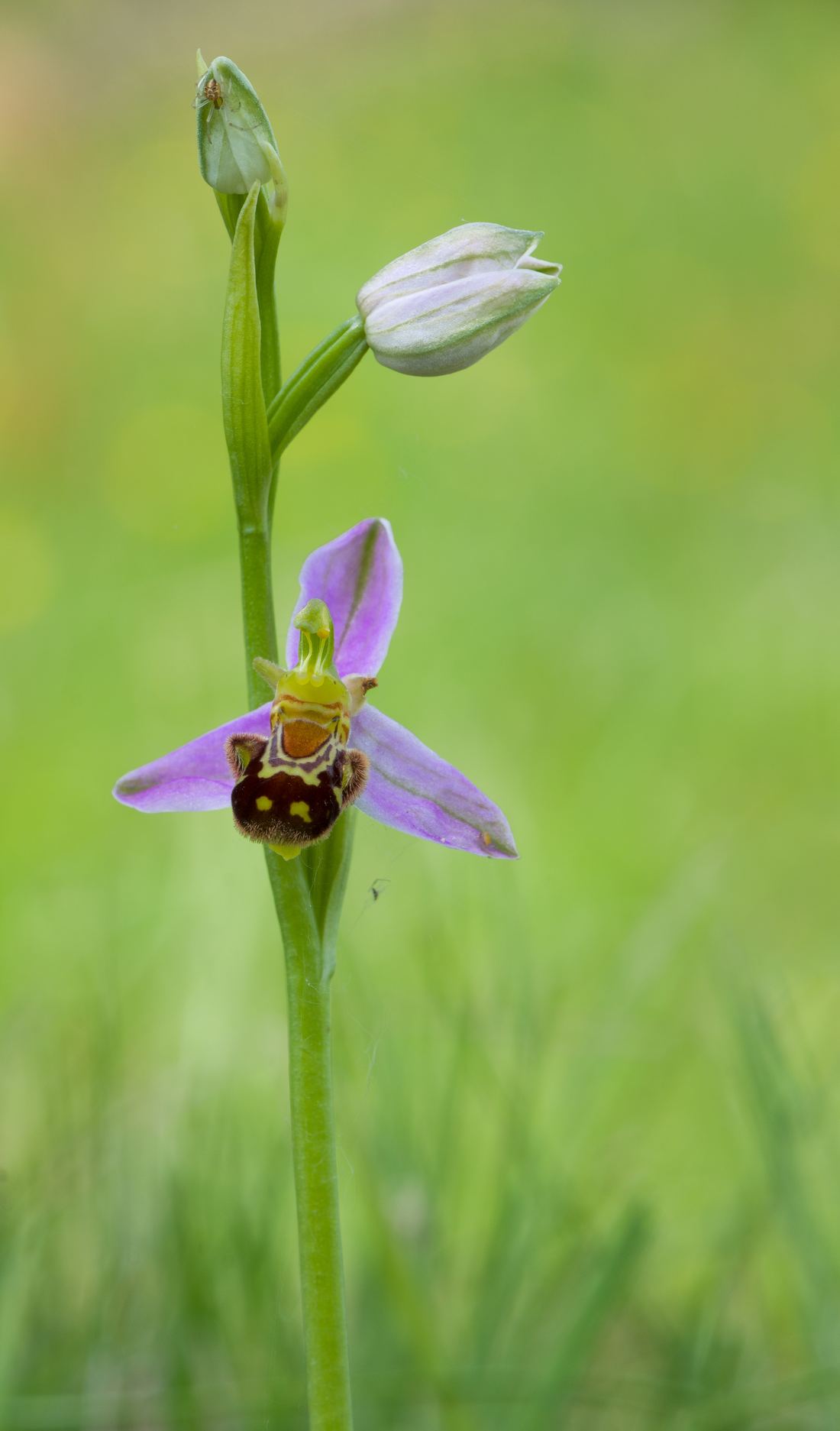
The bee orchid plays the trick in reverse. Its fuzzy lip is patterned like a bee's body, and the flower gives off a scent that copies a female bee. Around the Mediterranean, male long-horned bees try to mate with the flower and carry its pollen away. In the northern parts of its range, the orchid almost always pollinates itself.
Masters of disguise
Leaf insects take a different route. Instead of warning predators, they hide in plain sight, with flat green bodies and leaf-shaped flaps on their legs. When they walk, they rock back and forth like a leaf stirred by the breeze.
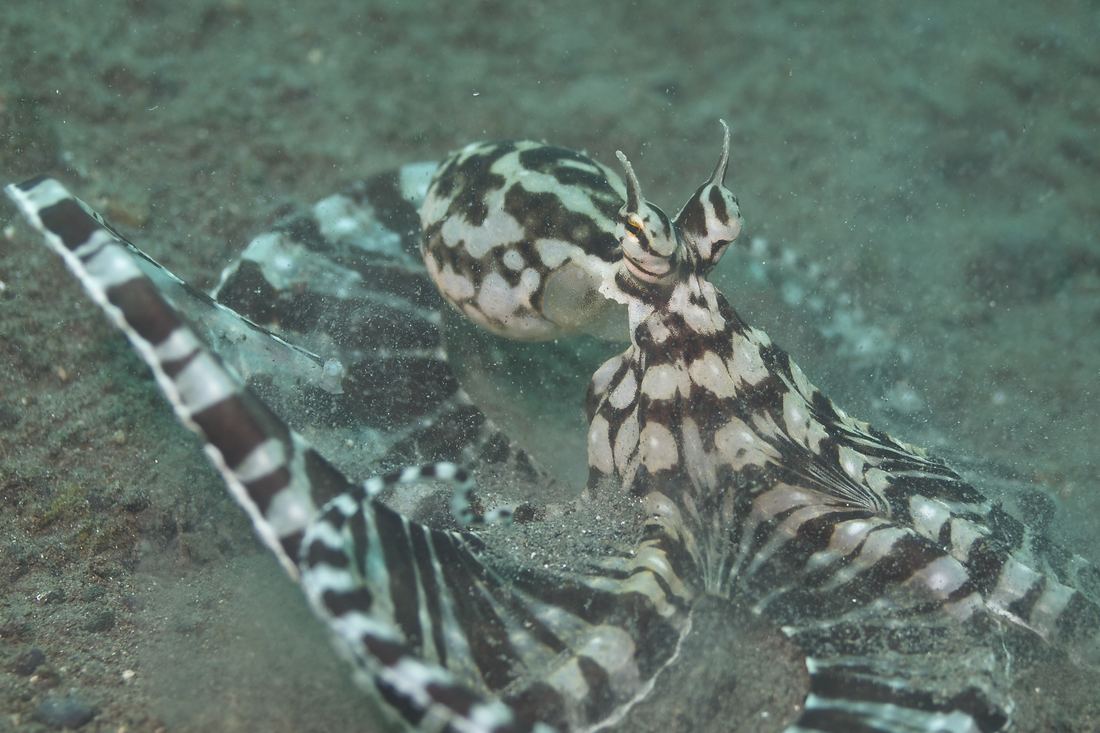
The mimic octopus, first found off Sulawesi in Indonesia in 1998, may be the greatest impersonator of all. It can pose as a lionfish by fanning out its arms, as a sea snake by hiding six arms and waving two, and as a flatfish by gliding along the sand. One study counted nearly 500 flatfish impressions from a single octopus in five days, and when damselfish harassed one, it turned into a banded sea snake, a predator the damselfish fear.
- A viceroy butterfly, the monarch's lookalike: Thomas Shahan 3, CC BY 2.0
- A mimic octopus on the sea floor: Elias Levy, CC BY 2.0
- A bee orchid, Ophrys apifera: Tuxyso, CC BY-SA 3.0
Text written by Actual Twin.
← Twin Landmarks and Famous ReplicasThe Science of Doppelgangers →